

How to Test your Sump Pump
Your Sump pump plays a critical role in protecting your basement from flooding, especially during the spring thaw when groundwater levels rise, and in periods of heavy rainfall.
Here’s how to test it:
Steps to Test a Sump Pump
Check the Power Source:
Ensure the sump pump is plugged in and that the outlet is functioning. You can test the outlet with another device.
Inspect the Pump and Basin:
Unplug the sump pump before completing this step. Look for any debris or blockages in the sump basin that might obstruct the pump. Clear out any dirt, leaves, or other obstructions.
Check for Proper Water Discharge:
Locate your sump pump discharge outside. If using a discharge line, ensure it is clear of debris and directs water away from your foundation.
Fill the Sump Basin with Water:
Use a hose or a bucket to add water to the sump basin. Pour enough water to raise the level above the float switch.
Observe the Pump Activation:
Watch for the float to rise with the water level. The pump should turn on automatically when the float reaches a certain height. Listen for the sound of the motor and feel for vibrations to confirm it's running.
Monitor the Pump Operation:
Allow the pump to run for a few minutes. Check that it turns off when the water level drops back below the float switch.
Test the Backup System (if applicable):
If you have a battery backup system, test it by unplugging the main pump and repeating the water-filling process to ensure the backup turns on.
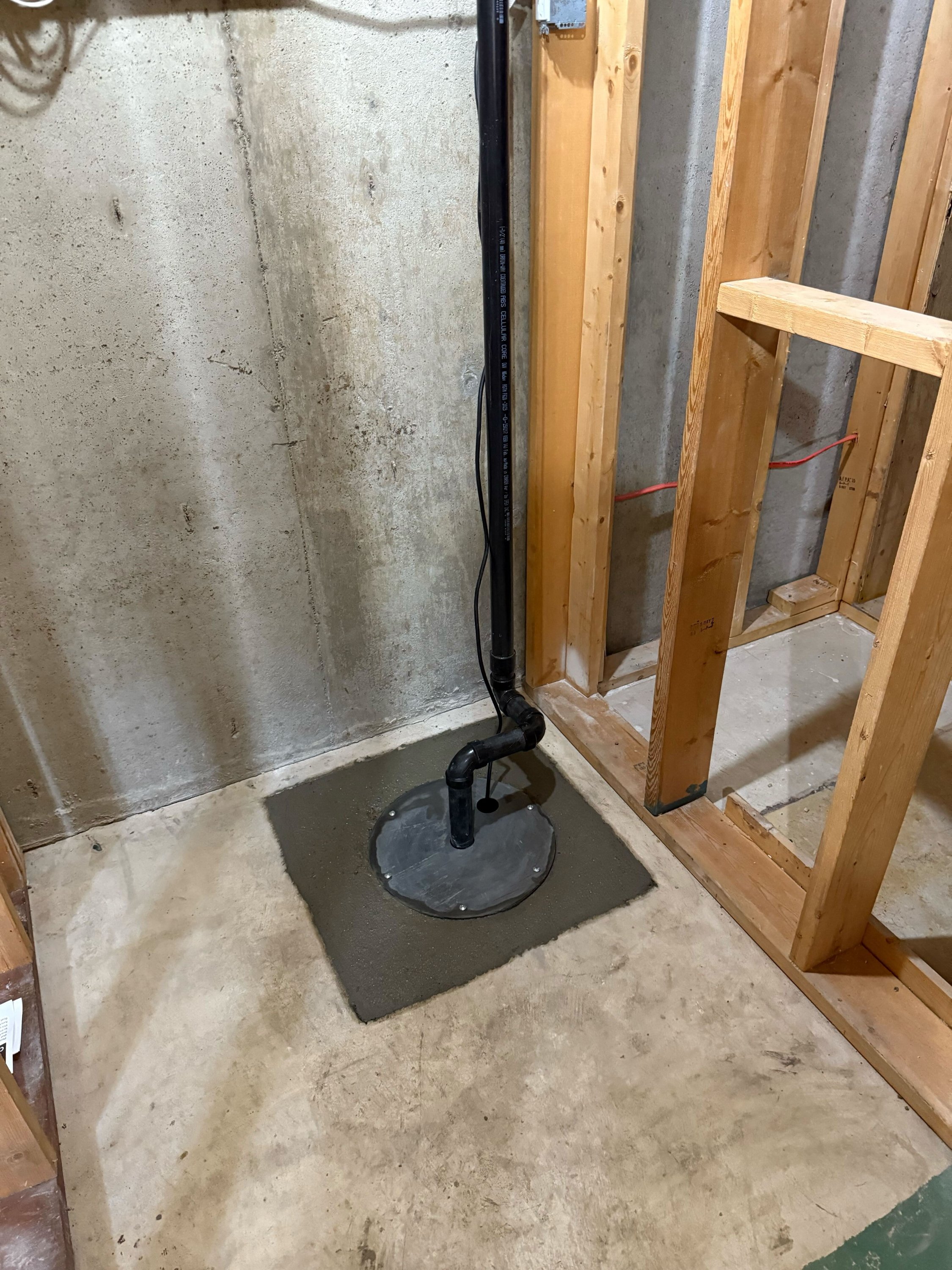
Frequency of Testing
It’s a good idea to test your sump pump at least once a season, ideally before the rainy season begins. By regularly testing your sump pump, you can ensure it’s ready to handle excess water and protect your home from flooding.
Winter Checklist
Prior to the first frost, ensure you are removing the discharge line and storing it for the winter. Colder temperatures can cause the line to freeze, any discharged water to back up, and your sump pump to eventually burn out. Splash pads can be used as an alternative until the weather warms up again.
Contact us to subscribe to our spring and fall maintenance checklist emails!

When to Call a Professional
If your sump pump does not activate, runs continuously, or struggles to pump water out of the basin, we’re here to help.
At LETY Construction, our team can inspect sump pump systems and drainage setups to ensure they are functioning properly and protecting your basement from water intrusion.